So, if death is such a negative in real life, why would it be portrayed so positively in "Go Down Death (A Funeral Sermon)" by James Weldon Johnson? I mean, who wouldn't want to take home this cutie?
 |
| Denver Airport, the center of all things evil |
 |
| Look at those veins! |
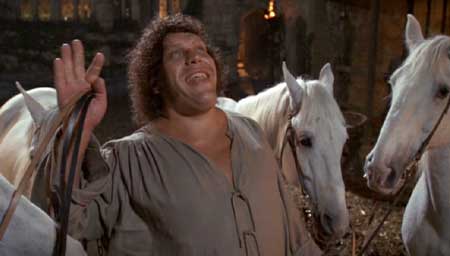 |
| From The Princess Bride. "Hello, Lady!" |
Do these horses look "Pale as a sheet in the moonlight" to you? Which of these would you be more likely to guess lacks blood running through its (very visible, I can assure you) veins?
So, perhaps Death's glorious steed isn't so beautiful as at first glance. But is not Death himself heroic? For one thing, God himself sent him to collect Sister Caroline (an interesting departure from normal Christian tales, in which Sister Caroline would've been straight away visited by Jesus -- how hard could it be for a deity that knows everybody and can be everywhere to meet one measly soul for its journey to heaven?). We can tell from his first direct appearance when he's in "that shadowy place, / Where Death waits with his pale, white horses." Nothing creepy about that...
 |
| You should probably know where this is from... |
However, all this isn't to say that Death is portrayed as a malevolent, incipient harbinger of doom. Everybody knew it was Sister Caroline's time to go. It the reason for God's command in the first place:
And his eye fell on Sister Caroline,
Tossing on her bed of pain.
And God's big heart was touched with pity,
With the everlasting pity.
But, not only that, he mentions her specific struggles, saying, "She's borne the burden and the heat of the day, / She's labored long in my vineyard." So, Death wasn't stealing her away before her time. And when he appears before Sister Caroline, she calls him Old Death, and the narrator says, "He looked to her like a welcome friend." He's taking her home.
So, who's ready for death? Well, Sister Caroline is, for one. In fact, today, several people probably lie on their deathbed, pleading for the pale, white horses to trod soundlessly their way. Death isn't just for those who are "too young" to die. And that's what this "sermon" is getting to. For all Death's apparent unpleasantness, Sister Caroline is ready for him. Now, everybody else needs to let her go.

No comments:
Post a Comment